
By: Tommy Monahan, Advocacy and Outreach Officer, LYMEC Bureau.
Young people are often told by policymakers that we are the future of Europe. If that is true, then young people need to be put at the heart of decision-making to meaningfully shape Europe’s policy and political direction from an early stage, rather than being consulted only once the overall direction has already been set.
Last month, I had the opportunity to represent LYMEC at the EU Youth Stakeholders Group meeting in Brussels. Over two days, we discussed the post-2027 EU Youth Strategy, in addition to a number of legislative proposals including the Quality Jobs Act and the Education Package. This was an important chance to put liberal youth priorities directly to the European Commission and to advocate for a more meaningful role for young people in EU policymaking.
Making youth consultation meaningful
LYMEC welcomes the Commission’s willingness to engage with youth organisations. These spaces matter and have real potential, but they can only work if young people can see tangibly how their input is used.
This was one of the main points I raised during the discussions on the post-2027 EU Youth Strategy. At the moment, the EU has several youth participation channels: the EU Youth Dialogue, Youth Policy Dialogues, the Youth Stakeholders Group, amongst others. Quite often, it is not clear how these processes relate to each other, where young people should engage, or what happens after they do.
I pointed to Youth Checks as a good example. The Youth Check is an impact assessment tool which has been introduced by the European Commission. The purpose is to evaluate the needs, rights and potential impacts on youth when new policy is being designed. They could be a powerful tool for bringing youth perspectives into EU policymaking, but only if they are credible, transparent, and followed up properly. I stressed that young people should know what input was received, how the Commission responded, what changed as a result, and why certain recommendations were not taken forward.
Further, I called for greater transparency around which topics are put to young people in the first place. The Commission should not be able to hand-pick the issues submitted for youth consideration without a transparent process. Similarly, I raised concerns that some discussions were limited by questions of national competence, which should be made clear from the outset so that young people understand where their input can realistically have an impact.
Finally, I made the case for stronger representation of political youth organisations. PPYOs are so much more than narrow interest groups. They are democratic channels through which young people organise, debate, and take political responsibility. I emphasised that excluding them from high-level youth engagement, such as in the President’s Youth Advisory Board, weakens the legitimacy of the process. Liberal youth voices, and political youth voices more broadly, must be treated as essential to youth participation, given the diverse range of people they represent. I was glad that Commission officials recognised this concern and said that stronger PPYO representation is something they would consider.
AI literacy, education and democracy
The Education Package discussions focused a lot on the role of AI and other digital tools in the future of education. LYMEC called for AI to be treated as a tool to understand and use responsibly, not something to be feared or ignored. I drew attention to the fact that AI literacy must now be seen as part of democratic resilience, especially as young people increasingly encounter AI in education, work, politics, and everyday online spaces.
Young people need the skills to use AI confidently in their education and future working lives, but also to understand its risks. That means being able to recognise disinformation, deepfakes, biased outputs, and authoritarian narratives that can spread quickly through digital platforms. I made clear that preparing young people for an AI-driven world also means helping them question the information they receive and understand when technology is shaping what they see.
I also emphasised that AI literacy needs to go beyond technical skills. It should be widened to include critical thinking, media literacy, data protection, and an understanding of how algorithms influence public debate and democratic participation. AI in education should support teachers and students, not replace human judgement or deepen existing inequalities. This point was particularly well received in my group and connects directly to one of our biggest digital challenges today: fighting disinformation and defending liberal democracy online.
Quality jobs for a changing labour market
For the Quality Jobs Act discussion, LYMEC focused on the need for labour markets that are both fair and flexible. I underlined that young people are entering a world of work shaped by digitalisation, platform work, remote working, skills shortages, and changing expectations around work-life balance, and that EU policy must reflect this reality.
I advocated for flexibility that genuinely benefits young people, especially when it allows them to combine work with study, volunteering, or civic and political engagement. At the same time, I made clear that flexibility must not become a cover for insecurity. Young workers need clear contracts, fair pay, and the ability to disconnect from work.
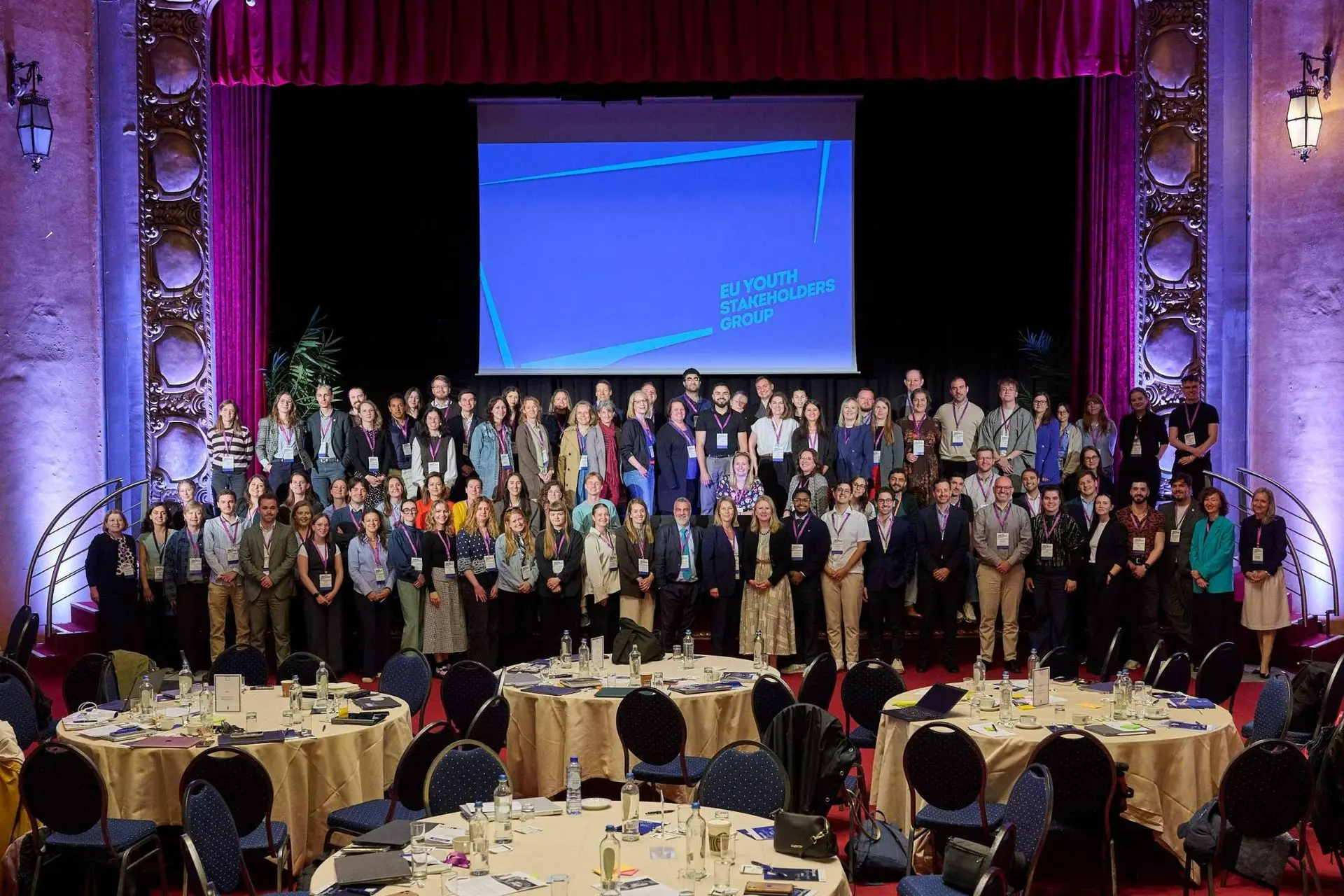
Mental health was a particular focus for our group during the workshop, and I had fruitful discussions on how it should be treated as a core part of quality employment. Too many young people face burnout, unstable working patterns, and pressure to always be available. A modern labour market should promote wellbeing, transparency, and the responsible use of technology at work, including when employers use digital tools or AI systems in recruitment, management, or performance monitoring.
What comes next
The meeting showed both the value and the limits of current youth consultation. The Commission is listening, and many of LYMEC’s points were taken up in the discussions. As LYMEC, we will continue to engage with the European Institutions on these matters. We have responded to the Commission’s Public Consultation on the post-2027 EU Youth Strategy, and we are delighted to share that we have been invited to participate in the 12th Cycle of the EU Youth Dialogue.
These are important opportunities to make sure that our points are followed through, so that youth participation can be made clearer, more representative and more politically meaningful, and to ensure that liberal ideas are considered and ingrained into future legislation. Liberal youth voices must not sit at the margins of EU policymaking; they must help shape its direction.
All pictures by Jérôme Hubert.
Funded by the European Union. Views and opinions expressed are however those of the author(s) only and do not necessarily reflect those of the European Union or European Commission. Neither the European Union nor the granting authority can be held responsible for them.
Youth participation must lead to policy change